
Front-running is a fraudulent practice where traders exploit advance knowledge of large client orders for personal profit.

The four-day carnage in stock markets has left investors poorer by over $100 billion, while they suffered a loss of more than Rs 1 lakh crore in Wednesday's trade itself.

Tata Steel was the biggest loser in the Sensex pack, sliding 8.59 per cent, followed by Tata Motors, Larsen & Toubro, Adani Ports, IndusInd Bank, Tech Mahindra, Reliance Industries, Sun Pharmaceutical, HCL Technologies, Tata Consultancy Services, Infosys, and NTPC, were the major laggards. On the other hand, Bajaj Finance, HDFC Bank, Nestle India, ICICI Bank, ITC, Asian Paints and Axis Bank were among the gainers.
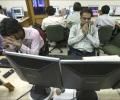
UK operations of several Indian companies might take a hit.

More than Rs 2 lakh crore was wiped off from the overall investor wealth

'While investors need to be prepared for making some losses, they should not lose big money chasing euphoria amid fear of missing out.'

Many high-profile IPOs in India since 2021 have destroyed investor wealth due to overvaluation, weak business models, and post-listing disinterest, turning 1 lakh investments into as little as 3,500.
The BSE Sensex bounced back by 14.8 per cent (2,261.65 points) from Tuesday's intra-day low of 15,332.42 to close at 17,594.07 on Wednesday. The index, which lost 5,874.35 points from its all-time high of 21,206.77, has retraced 39 per cent of its total losses.
Market expert Pranav Sanghavi shares some valuable tips.

Investors should now be looking at trimming their portfolio and making prudent investment decisions

'Somebody was using somebody to make statements that will stir the stock market and lead to a surge.' 'A sudden surge and a sudden crash is always an ideal situation for people to make illicit gains and then siphoning off the money.'
For the already invested, the road ahead looks rather bumpy. However, when markets offer little to cheer about, for ones who have stayed away for so long, it does offer a whole lot opportunities.
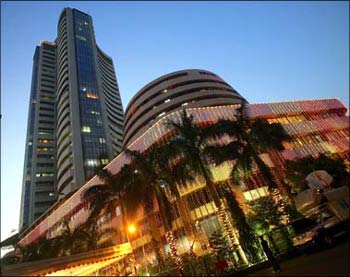
The longest winning streak was the six years between 2002-2007 when the Nifty moved from around 1,000 to over 6,000.
Jagdish Malkani, member of the National Stock Exchange, says that cement as a sector is definitely attractive; and hotels too are doing extremely well.

Investors should avoid making drastic changes to their asset allocation during a market correction.
Shailesh Mehta, founder & CEO, gurukulonline.co offers some valuable tips to counter the global crisis.
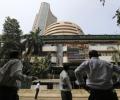
'It is easy to dramatise the events of today, but it is far more important to focus on the fact that we have a radically overvalued financial sector. It is a house of cards.'

Wait for a few days before deciding to buy shares or MF schemes.

In a pump and dump operation, fraudsters artificially inflate the price of a stock by spreading misleading or false information, creating a frenzy among unsuspecting retail investors.
When markets crash it is indeed time to be cautious. But here's why and how buying makes sense at such times.

'If the NDA comes to power with 320-330 plus seats, then we could see some correction. We could possibly see a level of 19,500 to 20,000.' 'If the NDA comes to power with a majority of 400-plus, we could see the markets going to about 23,500-24,000 levels.' 'And from there we could see some correction because markets are expensive at this point of time and a correction is overdue.'

From the Sensex firms, Tata Motors, Titan, Eternal, Power Grid, Tata Steel, Larsen & Toubro, Mahindra & Mahindra and Hindustan Unilever were among the biggest laggards. Bajaj Finserv, Asian Paints and Tech Mahindra were the gainers.

From the Sensex pack, Tata Motors slumped over 7 per cent. Adani Ports, Tata Steel, SBI, Power Grid, JSW Steel and Maruti were the other big laggards. However, Hindustan Unilever and Nestle ended in positive territory.
Investor wealth slumped by Rs 1.55 lakh crore on Thursday today, dragged down by massive selling in the stock markets where nearly seven out of ten shares closed lower.
Today's slide of 438.41 points in the BSE Sensex took the three-day losses close to 1,500 points, cumulatively eroding investors' wealth by over 100 billion dollars (Rs 4,06,000 crore).The selling pressure continued despite the arrest of outflow by Foreign Institutional Investors. FIIs turned net buyers on Thursday on the bourses with purchase of shares worth Rs 125 crore (Rs 1.25 billion), from being net seller of about Rs 1,800 crore (Rs 18 bilion) a day before.

From the BSE 30-share blue chip pack, 27 scrips ended with losses led by SBI and Tata Steel.

Mukherjee's statement comes in the backdrop of a sharp decline in Indian stock markets.

Investors became poorer by over Rs 4.47 lakh crore on Friday as markets faced severe drubbing, mirroring weak trends in global equities. The 30-share BSE benchmark dived 866.65 points or 1.56 per cent to settle at 54,835.58. During the day, it tumbled 1,115.48 points or 2 per cent to 54,586.75.

Investor wealth slumped by a whopping Rs 5.3 lakh crore on Friday as the benchmark BSE Sensex crashed more than 1,900 points to post its biggest single-day fall in nearly ten months. At the close of trade, the total market capitalisation of BSE-listed companies eroded by Rs 5,37,375.94 crore to Rs 2,00,81,095.73 crore. The total market capitalisation of these companies stood at Rs 2,06,18,471.67 crore on February 25.

The meltdown in Dalal Street that wiped out investor wealth to the tune of 44 trillion in 2025 also seems to be having a ripple effect on the country's vibrant automobile retail sales.
There will be tough periods in equity investing, but investors should not stop their SIP investments under any circumstance, advises Arnav Pandya.

Ajit Mishra answers reader queries on the stock market.

This route accounts for Rs 2.75 lakh crore of FPI holdings.

'It won't be a V-shaped recovery. It'll be consolidation.' 'Investors might exit during that grind. It'll be painful.'

'In the short term you keep your return expectations very, very low; in the medium term be prepared to invest and in the long term growth will come and your returns from stocks will be high.'

Donald Trump's tariffs, meant as political punishment, have avoided the predicted chaos, lifting US growth, weakening rivals, and letting him claim victory in a resilient global economy, observes T T Ram Mohan.
Investors' wealth on Thursday tumbled over Rs 2.81 lakh crore as stocks declined in line with selloff in global equities. The 30-share BSE benchmark index tanked 581.21 points or 1 per cent to settle at 57,276.94. During the day, it cracked 1,418.79 points to 56,439.36. In tandem with weak trend in equities, the market capitalisation of BSE-listed firms tanked Rs 2,81,147.38 crore to Rs 2,59,97,419.48 crore.
The Bombay Stock Exchange's Sensex plummeted to 16,865.58 on Monday early morning trade, down 440.29 points or -2.54%, while the Nifty crashed to 5,077.05 points, down 134.20 or 2.58%.

Conventional wisdom is that when the US sneezes, emerging markets like India catch a cold. And yet the Indian stock market went up last year, points out Debashish Basu.
 © 2026 Rediff.com - Investor Information - Advertise with us - Disclaimer - Privacy Policy - Sitemap - Feedback - About us - Terms of use - Grievances